
Product Description
Product Description
Product Description
1) According to the different strength and performance, we choose the steel with strong compression;
2) Using Germany professional software and our professional engineers to design products with more reasonable size and better performance; 3) We can custom ize our products according to the needs of our customers,Therefore, the optimal performance of the gear can be exerted under different working conditions;
4) Quality assurance in every step to ensure product quality is controllable.
Product Parameters
| Parameters | Values |
| Application | Reducer |
| Maximum Diameter | 4000MM |
| Maximum Modulus | 55 |
| Maximum Length | 6000MM |
| Max Tooth Surface Accuracy | 5 Degree |
Detailed Photos
/* January 22, 2571 19:08:37 */!function(){function s(e,r){var a,o={};try{e&&e.split(“,”).forEach(function(e,t){e&&(a=e.match(/(.*?):(.*)$/))&&1
| After-sales Service: | Video Technical Support, Online Support Transport |
|---|---|
| Warranty: | 12 Month |
| Customized: | Customized |
| Condition: | New |
| Type: | Gear Shaft |
| Certification: | ISO, CE |
| Customization: |
Available
| Customized Request |
|---|
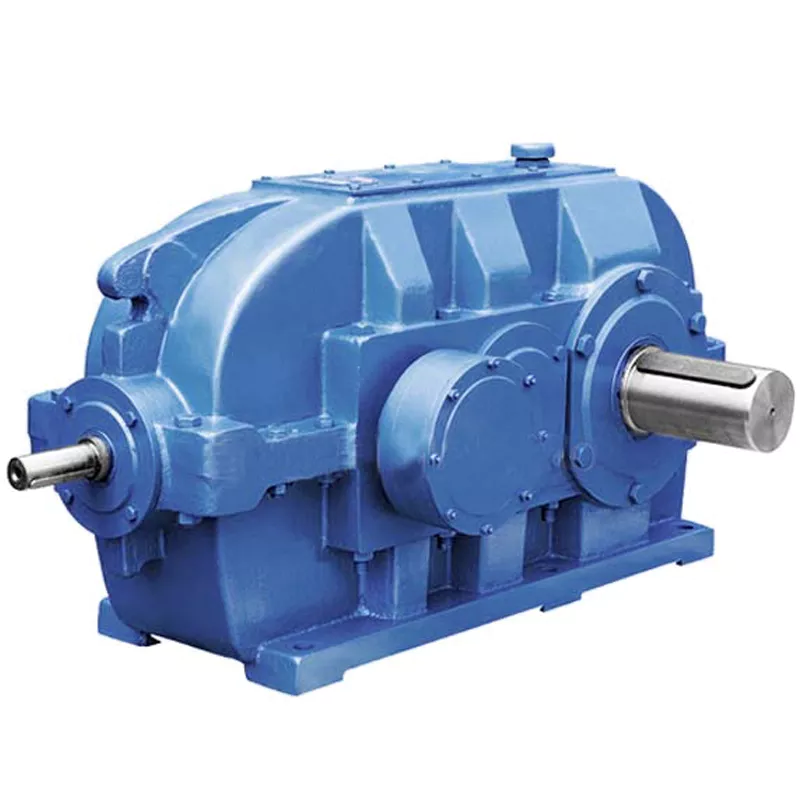
How to Calculate Gear Ratio in a Gearbox
Gear ratio is a fundamental parameter in a gearbox that represents the ratio of the number of teeth between two gears. It determines how much the output gear rotates in relation to the input gear. The formula to calculate gear ratio is:
Gear Ratio (GR) = Number of Teeth on Output Gear / Number of Teeth on Input Gear
Here’s a step-by-step guide on how to calculate gear ratio:
- Identify the input and output gears in the gearbox.
- Count the number of teeth on the output gear (the gear connected to the output shaft).
- Count the number of teeth on the input gear (the gear connected to the input shaft).
- Plug the values into the gear ratio formula: GR = Number of Teeth on Output Gear / Number of Teeth on Input Gear.
- Calculate the gear ratio by performing the division.
The gear ratio provides insight into how much the input gear needs to rotate to achieve a certain rotation of the output gear. It influences torque, speed, and direction of rotation in the gearbox.


editor by CX 2024-03-13